
Elder Care Navigation
Elder care in Ontario includes two main types of licensed elder care homes: long-term care homes and retirement homes.
Retirement Homes
For older adults who want independent living with optional support services. Explore how retirement homes differ from long-term care, what services may be available, how costs are structured, and how to find licensed homes in your area.
Long-Term Care Homes
For people who can no longer live safely at home due to complex medical or cognitive needs. Learn how long-term care works in Ontario, how to apply through Ontario Health atHome, what costs to expect, and how waitlists are managed.
Additional Resources
Guides and tools to help you compare options and plan next steps. Find practical information on moving to long-term care, understanding waitlists, touring retirement homes, and asking the right questions before making a decision.
What is a long-term care home?
- Long-term care homes are provincially funded, and licensed by the Ministry of Long-Term Care.
- Admission is coordinated through Ontario Health atHome.
- Residents receive 24-hour nursing care, personal support, and help with daily living.
- Accommodation rates are set by the province, and financial assistance is available for low income residents.
- Waitlists are triaged based on care needs, not time spent waiting.
- Long-term care is most appropriate for people with complex medical needs or significant cognitive decline.

Long-Term
Care Guide
Long-Term
Care Map

Ontario Health
atHome
What is a retirement home?

- Retirement homes are privately operated and licensed by the Retirement Homes Regulatory Authority.
- Families connect with retirement homes directly to discuss availability, care options, and costs.
- Homes can offer a range of support, including independent living, assisted living, memory care, and in some cases palliative care.
- Retirement homes are private pay, and fees are set by each operator.
- Generally, as support needs increase, the monthly cost will also increase.
- Typically offer daily activities, socialization, and cognitive engagement.
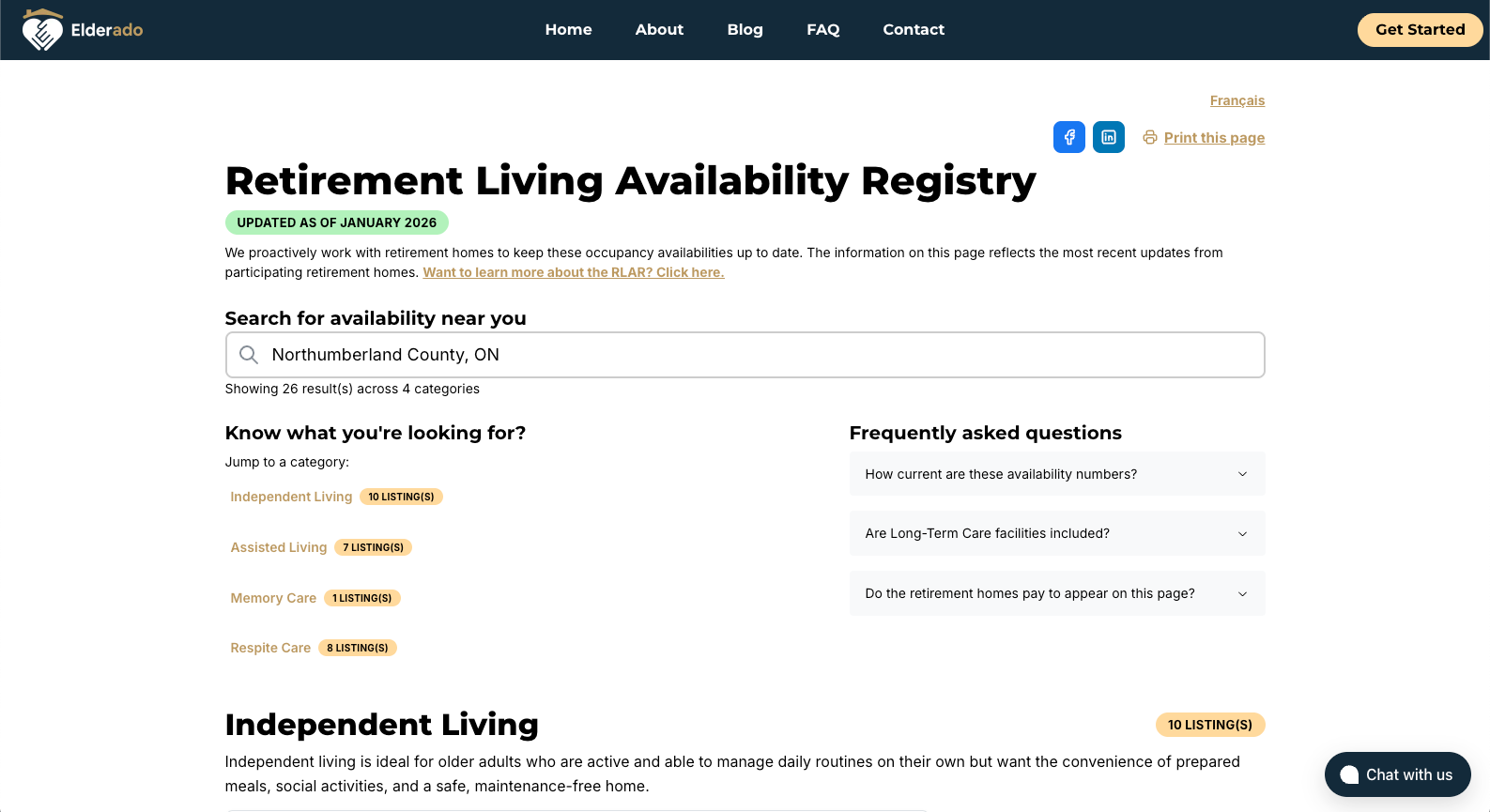
Retirement Living Availability Registry
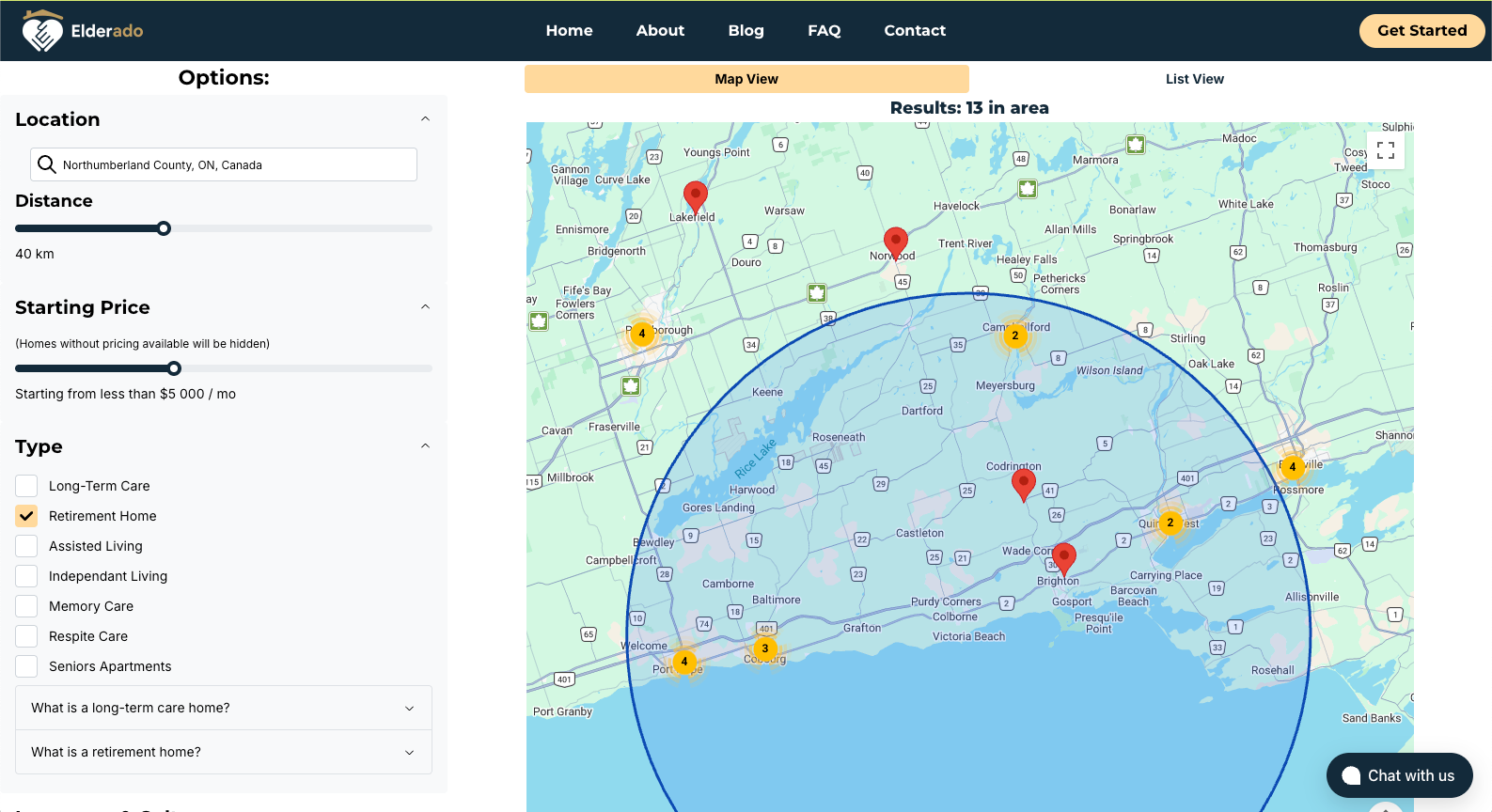
Retirement Home Map

Retirement Homes Regulatory Authority
How to compare elder care options
Families can use Elderado to search, filter, compare, and contact every licensed retirement home and long-term care home in Ontario. Elderado helps you understand levels of care, explore services, and see what each home offers.
The Retirement Living Availability Registry (RLAR) shows which retirement homes currently have suites available, making it easier to understand your options if care needs change and you need to find support quickly.